Memoir
 After Susanna overdosed on drugs trying to kill herself, her parents send her to therapy. She is sent to a therapist on the other side of town and after only 30 minutes, the therapist decides that Susanna should be admitted to the famous psychiatric hospital McLean, where Ray Charles and John Nash have stayed. Just from this decision made in 30 minutes, Susanna loses a year and a half of her life staying in the hospital. They diagnose her with borderline personality syndrome.
Susanna tells of the friends she makes in the hospital and their stories. Some are sad, some are funny. But really the point of this book is to determine what defines us as crazy? And can a single doctor, in 30 minutes, really determine properly if someone belongs in a hospital? Isn't everyone a little crazy?
I found some of Susanna's commentary on her disease to be a bit tiresome, but the last chapter on it was very interesting. Having seen the movie, I was expecting something entirely different. The book is nothing like the movie at all - and in this case I found the movie to be more interesting, even if less realistic, than the book.
First Line: "People ask, How did I get in there?"
Rating: 

(3.5/5)


 Tuck blows it when he takes a prostitute up in the pink Mary Jean jet while drunk and crashes it into SeaTac airport. Mary Jean wants him not only out of her company, but off of the continent immediately so its easier to deal with the media backlash. Tuck gets a letter from an island in Micronesia called Alualu, where they are looking for a pilot to fly their brand new Learjet. Tuck doesn't even think about how missionaries could afford to purchase a brand new jet before he accepts and heads off down to start a new life.
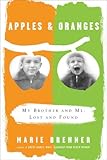 Marie Brenner has written a memoir about her confusing and strained relationship with her brother, Carl. He is as conservative as she is liberal. He is a former lawyer turned apple farmer, she is a big city investigative journalist. All their lives they have been 'at each other's throats'. Neither understanding the other. It was just easier to live apart.
 This book takes place in Nanjing the year leading up to the infamous massacre by the Japanese in 1937. The story is about Ding Wenyu, a womanizing professor of foreign languages. He is a immensely popular professor who does not abide by any rule of either etiquette or common sense. He is invited to the wedding of one of his colleague's and falls head over heels in love with the bride, Ren Yuyuan. He starts by sending daily love letters to her. She at first is embarrassed and does not know how to handle the undeserved attention. Ren's marriage to a arrogant philandering pilot has problems from the start.
 Howard Norman is employed by a museum to travel to Churchill, Winnipeg, Canada to transcribe Inuit folktales into English. There he meets Helen, who is essentially doing the same thing, except translating into Japanese. Helen has a better command for the language and gets along much better with Mark, the person who they are hearing the folktales from. From the beginning we learn that Helen has stomach cancer and Norman uses the book to explain the impact Helen, Mark, and the folktales have made on his life.
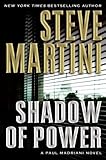 When a controversial author is found murdered in his hotel room, the police waste no time pointing the finger at Carl Arnsberg, an employee of the hotel that happened into the author's room. Paul Madriani is the defense for the case and quickly delves into the controversy that the author left behind. This includes a potential letter written by Jefferson that has the potential to shock the USA and set the country into a race war.
  Despite the name of this book, it is really a biography about Galileo through the adult years of his life. It chronicles the positions that Galileo held, where he held them, and what scientific discoveries he made that have shaped modern science. Behind all the science, however, were Galileo's family and friends. Galileo had two daughters, which were sent at an early age to the convent, and a son. He made friends in the religious community, as well as with the Medici family, becoming an official mathematician of the Florence Medici factor.
  Coupland has written a book about a high school shooting. The difference is it is told in four voices; Cheryl, Jason, Heather and Reg. Cheryl is the last person shot and the secret bride of Jason. Jason stops the killings by killing one of the murderers. Jason's father, Reg calls his own son a murderer which leads the police to suspect Jason as the mastermind of the shooting.
 This book is #3 in the Calder series. Chase Calder is the latest in the dynasty of Calders. He has grown up knowing he will inherit the ranch and the acres and acres of land. Maggie O'Rourke is a neighbour. She lives on a small ranch and her father and brother are extremely envious of the Calders. Chase takes Maggie's virginity and innocence. Maggie's father loses it and starts rustling Calder cattle. What results is an action that may never be forgiven. Maggie also doesn't want just the ranch life, she wants to make something of herself.
 Gladwell points out that in order to have an epidemic there must be a Tipping Point. Something or someone who causes it. Gladwell gives various examples throughout the book from sales of Hush Puppies to the lowering of the crime rate on the NY subway system. The tipping point is always not what is expected. For instance, cleaning the graffiti lowered the crime rate as a cleaner environment fosters better behaviour.